Showing posts with label reviews. Show all posts

Tuesday, September 10, 2013

Killer is Dead: The Man Commands

(((This is a crosspost from http://lastbossgamehaven.blogspot.com . Mostly just for my personal categorization. I could use some revision, and some extrapolation (especially considering I discuss the combat for only one whole paragraph), but I don't think I'll bother)))

It's curious the way critic culture has shown up in how we discuss games. All discussion seems to rest on the very base, a couple talking points and a score to go with it. Discussions of things like mechanics only extend to as far as "do I find them entertaining", and discussions of story or symbols reflects on narrative purpose or initial reaction. This boiling down is pretty much status quo for a large conglomerate sort of review site; as they don't need to analyze, part of their process is playing a game up for the market, not for the connoisseur (discussions of the capital value of art aside). However, when this reflects on the entire community, it seems to create a sort of egregore of assertions revolving around a lack of strict, critical thinking. The sort of thinking that Killer is Dead demands.

To build a reference, there's a game mode in Killer is Dead that has some people gasping.  Among the various murder sprees involved in the "story" missions of the game are a series of "Mondo's Girls" missions, boldly titled: Gigolo Missions. It's a simple mini-game in which you have to scope out these girls' bodies, until you've built enough of your supposed "pleasure" meter to give them gifts. On the surface, it's domineering, misogynist, and and bit boorish. Frankly, it's what you expect of games, but it's also expected as a bit of an unwritten rule. It's not given the focus of its own mission, only reflecting in singular moments (such as Kratos's various sex mini-games in the God of War series, the minor relationship management in recent GTA games, etc). If you're not willing to fully examine its purpose in the story, then it does have very very poor connotations, and even within the context it is very luring and extensive. However, it does have its arguments for necessity, and unfortunately it will force you to understand a significant portion of the story (obviously, as I see it), so if you came just for a review, ignore that in between the two pictures.

Killer is Dead's story is bombastic, in no minor sense. As a flat narrative, it literally goes to the moon, early and often. The game's hero, Mondo Zappa, is a hedonistic assassin with remarkable skill and swagger. Donning a clean cut suit and running through his hair moments before the major battles, he treats each moment as a virile encounter. Really, the notion of sex and desire meet the game at every corner, which is not that surprising, considering Suda's seemingly effortless ability to convey space in a Freudian or Lacanian sense (which seems to come with the territory of being a bit of a post-modern auetur). His (Mondo Zappa's) role in the game is performing the player's duty in an assassin organization, funded by the government and led by a cybernetic man, Bryan Roses. Mondo himself is aware of this role as an actor for the player, mentioning several times throughout the game about the function of an "action game", most specifically in relation to the major boss of the game, David.

To take a step back, it should be known that Suda himself stated the game was a step back towards what he did with Killer 7 and No More Heroes, although it'd be quite obvious from the entrance to the missions, complete with a sound effect straight from Killer 7, as well as a reemergence of the moon motif. In fact, Mondo's name itself seemingly references Flower, Sun, Rain protagonist Sumio Mondo (who further references The Silver Case). The relationship between these games actually plays a significant portion into the reading of the game as well as in all of these games, the main protagonist played a function for the player's interpretation of the game. In Flower, Sun, Rain, Sumio's search for truth and necessity resembles and questions a player's intention for solving stories in a game. In Killer 7, it uses the player's journey to symbolize, amongst a world of other ideas, how political hegemony can influence a person's perception of the "other" and the multi-fold nature of power. In No More Heroes, the perception and intersection of violence, power, identity, and sexuality, with some pretty hefty game commentary.

Under that idea, what does Mondo Zappa represent? As referenced before, it's (mostly) hedonistic desire, and its relation to violence and dominion. Throughout the campaign, Mondo is heavily focused on women, particularly in the client for the 4th mission, Moon River. In a mission that requires Mondo go to the moon, he accepts, even ignoring the lack of money needed for it, for only a kiss from the attractive client. Even when he does get money, the majority goes towards gifts for other women. The structure of the game is there to support your own search for desire; in a market appealing to straight men, the women are alluring, and the cheeky reactions from finishing gigolo missions are enough to even push your forward had you been resistant to their charms (the sound effect played after a successful mission is fantastic), and even if that's not enough, you get more realized awards, from something as necessary as the secondary weapons, to your upgrade material in moon crystals.

The game rewards you for doing this, but the story does not. The further you get in the game, the more you learn about Mondo, and his past. You learn that David, your foil and main enemy, was not only previously an employee of Bryan Roses, but is your brother. He is the player you are surprised you're not, a main only bent on physical dominion, introduced as the coup leader of the dark side of the moon (taken from Moon River), and latter known as the man striving for the Earth. He even attempts to hand you the moon as an act of possible gratitude, which you reject, leading to a bit of a two-fold reaction as he suggests you have to get Mika, your secretary-esque figure (whom here reflects the subversive power she had been given as a mere servant, and highly sensationalized trope, for you and the rest of the organization ring, in order to claim the sun). It's both suggestive of your implied desire for the worthless and unrespected (the sun, in an earlier mission, claimed to be worthless in regards to a mission where the organization doesn't get paid, again, however, slightly subverted as Mondo does not desire the sun), as well as suggestive that Mondo desires only the sensual. In the end, however, the darkness, that which has been empowering David, which has spawned the Wires, your main enemy, and which your cybernetic arm has been keeping out, engulfs you, as you claim the moon, and rebuild David's mansion, and are in turn claimed on a contract by Moon River.

The Killer 7 relation shows up once again in the meetings between David and Mondo, as they recall their games of chess, much like Kun Lan and Harman Smith of the aforementioned game. It has plenty of meaning here, becoming somewhat symbolic of the godly nature of the two characters, as well as deriding their intentions, specifically in how they relate each other to "action games" (chess, taken as a cerebral game is remembered fondly by David, while Mondo seems to ignore it completely; later, David suggests the room is illfitting of a fight, to which Mondo agrees, suggesting a more open and empty space)(for a more in depth dissection of the use of chess, try this). David and Mondo, as much as they are flawed and headed towards self-destruction, are simultaneously godly figures of larger, worldly conflict.

Mondo's mentioned hedonism is shown to be reductive in other ways, however, as your "targets" in the gigolo missions inject in the main missions, asking you to come back to them, that Mondo is a "cold man" for leaving them, begging for his affection again. His James Bond style conquest is visibly destructive, but self empowering in the dominion. Even the achievements of the game lean towards this Foucalt-esque deconstruction of sex and power, implying that when you "win their heart" you make them a "prisoner in body and mind". His desire for sex isn't so much of an objectification of women as much as it's an objectification of the act and it's role in society.

Suda's women are not necessarily weak, however, in the measure of the story. Though sexualized, as shown through the gaze of Mondo, the two women in Bryan Roses' Execution firm (I forget the official name), are able, and in many cases the superior to Mondo. Vivian, the second hand of the firm, is perhaps the most able. Powerful and intelligent, she could clearly be argued to be using Mondo in the same way he uses his women, although with slightly more subdued desires (that is, compared to his final "achievement" of gaining reign over the moon). As for Mika, the previously mentioned "secretary", there isn't as much understanding of her use, other than the success of it. Although she was unable to pass the test necessary to become an employee, she joins as a supposed "package deal" with Mondo, and takes place in the story. She performs an essential role with Mondo, reviving him should he fall (though Mondo tries to save his male dominion by counting it as a negative (it reflects poorly on his final score)), and even in her function away from Mondo's battle, seems able and successful in dealing with wires, resulting in the ultimate rejection of the darkness, becoming the ruler of the sun, itself giving life and energy, which she has in bounds.

One final woman plays a significant role in the story, in Dolly, the mysterious figure that haunts Mondo and Mika. Never sexualized, she is the figure that provides perhaps the most destruction and pain throughout the story, tainting his memories and attempting to corrupt him, and later corrupting Mika into killing their leader Bryan (kind of). Mondo's inability to deal with her may be the biggest measure of her usefulness as a foil to the "weak" women portrayed as objects for Mondo. In a game explicitly about sexuality, she becomes almost inhuman in her implied rejection of it, which is figured in her construction as mostly Wire.

However, for as flawed as Suda paints some aspects of a human female, his male description more subversively destructive. For example, Bryan and Mondo reflect fondly on a train of certain historical significance, stating that a man's desire is in the mechanical. I posit that mechanical is the literal translation for what he's saying, but he more-so means the "physical". As Suda seems to want to fully dissect hegemonic gender roles, he wants to enforce that men, perhaps more specifically men playing video games, do not actually care about emotion and expression, but only pure steam-powered reflections of brute force. The train here seems to provide a Freudian function as being a fairly direct visual as a phallic symbol of the supposed desire of man (I suppose a Lacanian interpretation of the game would be useful, but I'm not confident in my knowledge of Lacan, nor do I think I'd have the time to do one while this game is relevant).

In that "male desire", we see the death of others. The artist which is our first client is dead, the musician which is another client is dead, the scientist, dead, and so on. With this desire for the physical, for the sensual, we destroy the desire for that which is represented in "the mind". Perhaps this is the derivation for the name of the game, Killer is Dead being a symbol of the function of killing, but of more. In previous games for Suda, Killing itself is a symbol of game. Simultaneously an exploration of the violence that pervades games, as well as an ultimate of a desire of domination, Killer is Dead seemingly suggests that Mondo doesn't desire the killing, the means of his journey, but simply the result, his sensual passions.

Now, a directionless, stream-of-consciousness rant is hardly enough to summarize a story that is as extensive as this one seems to be, especially when I barely even reference half the missions, but there are some things of note here that relate to this general conception of this game being misogynist. For one, the game is not using the gigolo missions to their own end. The concept of these missions is to simulate Mondo's similar carnal desire. You're meant to want to "get these girls" in the same way Mondo does, and failing that, use them as an object in a similar manner (succeeding with these girls gives you benefits for story missions, for reference, check this Jason Rohrer piece about materialistic gains simulating personal relationships in games). It's not self-serving eroticism, and even for as lingering it is and as suggestive it is, it attempts to repeat the gaze of Mondo through the screen (note: you are literally looking through Mondo's eyes during these scenes, for the most part). Secondly, the reason it is trying to use it to simulate Mondo's goals, is that the game is very aware of gender roles, and their ties to a global hegemony. The game uses these missions less to show the woman as materialistic, and more to show the man as domineering. It's showing the interlinked relationship of sex and power, even done literally in something like the achievements, in which women you go "all the way with" are listed as "prisoners" for you. The game, as one of its major strokes, is attempting to deconstruct our perception of gender roles, even to the point of implanting sympathy in these girls which have no story relevance (Betty appears as a main figure in a mission, but only a DLC one). Throughout the games, even in the middle of gigolo missions, these girls beg you for affection, they want you back. The player is intended to disconnect at this moment. It's not played for humor, it's played in order for the player to step back and think about the futility of Mondo's actions and the consequences for it.

The majority of the rest of the game play follows somewhat of the same rules, leading towards the story in function, rather in intense interactivity. The roles of the assisting members of the organization play towards their roles in the story, and the manner in which Mondo attacks becomes less of a vessel for the story, and more a necessity of progression. While it may not be emotive itself, although it does feel somewhat virile, it does have a motivation for it, and is not really unwelcome in the story.

And it's not unwelcome mechanically as well. It's a mostly reactive hack n slash, making the attacks periphery to reading the battle, where dodges and blocks become your advantage (this is, I suppose, somewhat symbolic of rejecting the dark before defeating it, or also rejecting the dark being the same as defeating it). It results in a very fast paced system, requiring slightly strict timing to open your attack up. The secondary weapons apply enough necessity to where you need to do the gigolo missions, but are secondary enough that you don't rely on them. Your skills are limited, but useful, and nothing feels significantly worse than another.

The music is fantastic, as Silent Hill alumni Akira Yamaoka fills the atmosphere with gritty dark ambient, even vaguely noisy collections to create a brilliant interplay with the wonderful visuals. In a MC Esher inspired Alice in Wonderland motif, a jangly piece goes along with the heavily colorful and heavily shadowed playhouse to create an uneasy feeling, a latter level feels as outsider and otherworldly as it is, and the sound effects are crisp and cool (and one at the end of the gigolo missions is so fantastically cheeky and virile it's adorable). He seems to channel a bit of Masafumi Takada, the composer of Killer 7 as well as other Suda 51 games, which seems to relate this game to Killer7 even more, especially to the point of reusing (recreating?) some sound effects.

As an entire piece, I really adore what Suda's done here. I've always been a fan of his work; he's certainly one of these most intriguing designers out there, and here he's flying. It's not necessarily as self-reflective, and honestly self-serious as Killer7, even to the point where I was disappointed with the path he was going on until it all started to wrap up a bit better towards the end (of note, "wrap up" is relative there as it's still very mysterious and I certainly don't understand it completely... at least not yet). It really comes to a point that I'm disappointed with the reaction from it. Perhaps it's mostly Western, as this sort of over the top, post-modern game that intends to present serious topics with a bit of absurdest scenarios (Especially in the gigolo missions, it's wildly absurd) seems to mostly come from Japanese developers, but at the very least it's not really adventurous with their inspection of the game. It's a bit ironic, considering after Lollipop Chainsaw I envisioned Suda just moving to "Pinku" games that were nearly straight exploitation, which I still believe should happen with some game director, if not Suda, but the reaction that the sexuality involved is mindless and excessive is understandable, but ultimately disappointing. It seems to resemble something like Nagisa Oshima's In The Realm of the Senses, which uses a fairly famous Japanese story of lovers to tell an explicit story of desire and politics, using very intense sex scenes, even by today's standards. I almost feel it regressive to immediately knock it off as only there for the self-serving nature of it; for the enticement of young males, even if it feels that way for a long time, even after finishing the game in some manner, but it's erroneous to view sex as only sex, as in this game, not even death is only death, and really, this game isn't only what critic culture would see for a "game".

Friday, December 14, 2012

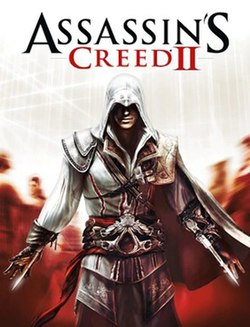
Assassin's Creed 2/Brotherhood/3 reviews


"Feels like I'm doing nothing at all -nothing at all-"

         If you find yourself on any game forum then eventually you will find yourself neck deep in a discussion about whether "games are art". It's bound to happen, it's one of the biggest discussions that modern gaming can't seem to shake. The actual topic seem to came out of (in my experience) insecurity from the gaming community. In order to reject the idea that games are for kids (not an idea anyone should entertain, especially now with the success of Angry Birds showing that even the old chess-playing masses can be enamored with a cute aesthetic and honest to goodness tight mechanics), they've built this narrative that games are for the intellectual elite, as they are art!. What follows is a desperate attempt to marry "art" and "gaming", finding any link of the two they can.

Firstly comes the idea that, "it's a human media creation that came out of imagination". That itself is sort of self-defeating on the idea that gaming is certainly "for adults", because it doesn't really define anything about it. If that is the case, all games are "art" as are all drawings, movies, music, etc etc, so in actuality, that argument is merely saying "this is a pointless topic", so good on that.

Next, the idea that "games are created for expression, and not function", but this itself is very highly contested. For one, games are sold for a profit, that in itself defines a function on the role of the creator. For two, sport and games of all sort have been around for as long as civilization has. It could easily be considered a biological function to have a desire for "fun" and game. The idea that game is built merely outside of function would seemingly define that games disconnect from what it traditionally means to be a "game". To make a game that rejects the need to have a goal that you have to better yourself to work to, to allow for the interactivity build itself as a mode of expression itself, and "fun" to be only an applicable function of that expression, not the central idea.

Lastly there's the idea that whether games are art is not the question, but rather if there are games that are "good art". This is the sort of Ebert argument that has people up in arms. That games are not art because the majority are poorly designed, poorly written, poorly expressive, etc etc etc games that simply fail to be anything "more" than the game they present. It suggests that even a symbolic game fails on the simple premise that the entirety of the game is not designed in a fashion that makes the entire piece work on it being a piece of expressive art. For example, if one were to argue there are certain expressive aspects of Bioshock, that the gameplay doesn't adequately support those aspects, the game fails to reach a certain "criteria" of art.

What this means for gameplay, is that every motion you make needs to have a function or feeling to contribute to an overall emotion. For example, Mario games are designed with such fluidity, that the majority of the game creates this almost meditative experience where as a player you can just sit there watching your character jumping and sliding, and that alone gives you a certain satisfaction. Resident Evil makes your characters movements restrictive, like a bad dream where you wake up to find yourself heavily constricted in your covers. Movements have an anxiety-inducing disconnect.

Assassin's Creed 2, Assassin's Creed: Brotherhood, and Assassin's Creed 3, are all "not art".

The main problem I have with these games, is that they seem to actively reject having a player "do something", in order to create a false sense of feeling. As you run across buildings, you don't really feel the character running across, because you as a player are doing nothing more than running and holding a button. Mario jumps. He has obstacles he must encounter. Hitting these obstacles correctly gives the player a greater sense of satisfaction about the flow they create with the physics. It's a problem with Assassin's Creed that the majority of the game is centered around this rooftop exploration. Not only among the missions, but the entirety of the game is about giving you "more to find" with the city. You have feathers to collect, glyphs to find, almanac pages to chase, all of this is outside of the narrative, just giving you stuff to do as you walk around grabbing this and that.

The other big part of the games are the combat, where little improves. For these games the combat is largely mindless, and incredibly simple. Any discussion about the combat will come to the whole suggestion of "press counter button. bad guy dies". Really that is the way most fights will go. You'll be fighting a handful of people, and easily the most effective way, really the suggested way by the game, is to be defensive, wait for someone to attack, and then hit the psuedo-QTE counter button and get the kill or just health off if it's a bigger enemy. This is even further expanded on in Brotherhood, where after getting one kill, you can just jump from enemy to enemy pressing one button for a one hit kill regardless of their strength. It's so mindless that combat itself serves no purpose in the game other than being a time sink. It's not really a punishment for failing to stealth, because it's not making it harder for you. It's not making the game progressively harder, because you're rarely in danger of dieing in the fights. The idea is that you're supposed to feel like you have wonderful technique, timing up one button press and getting a fantastical cutscene kill, but it gives no feeling at all other than an annoyed tedium. (For what it's worth, Assassin's Creed 3's adjustments do a little better, making you have to press an additional button to counter kill, but it's still incredibly easy, to the point that starting weapons are all you'll ever need). Additionally, it's really disappointing that the only reason to change weapons is just to see different kills. The actual manner your approach combat is unchanged.

The stories of these games are also poorly constructed messes. There's a bit of cheeky hi-fi goodness to them, introducing you to historical figures like Ben Franklin and De Vinci, but it doesn't really seem to have much meaning other than to throw them in... not that that's really a huge problem. The problem is the convoluted story with an overdone premise and so many tenuous, unimportant ties to legitimately important things like religion, economy, free will and the like. It treats these issues with a amateur interest, with a biased, unexamined look at them that really fails to make any meaningful statements about them, and really throws them away for the most part. The other problem is how they seem to pander to reactions rather than to meaning. For example, there's a twist in Assassin's Creed 3, only a couple minutes into the story, which throws a wrench into much of the lore of the game, only to be explained away in the next minute of narrative.

The main draw of these games are the worlds, in fact I've had a discussion in which someone said (paraphrased) "if there were another game that allowed me to explore historical florence and boston i'd stop playing assassin's creed". I won't trash this, because the cities are nice and I enjoy their look, but for what it's worth, I knew I had had enough with Assassin's Creed when I saw a set of boxes in Boston...the same set I've seen in Venice and every other city in Assassin's Creed. It's fine, I like that on the basis of game design, but then I realized that the best of the cities are to look at, not for climbing. In fact appreciating the city seemed to come at odds of building a nice city to have a good flow in the parkour aspect. Minor complaint in the long run, perhaps just overexposure of these games.

And for what it's worth, the best portions of each games:
2/brotherhood: Glyph puzzles. Some were dumb, but I enjoyed them
3: Naval battles. One of the few times where I think the cinematic presentation of the game didn't come at odds with the gameplay.

No picture, i've spent enough time and am really just tired of everything Assassin's Creed, just give like, 2/5 or 1/3 or something like that for these. Neither are really "better" in any significant way, the changes are kinda hard to compare in some respects.

Friday, November 30, 2012

Xenoblade Chronicles: Review


 "I've played 6 straight hours without touching the main story"


        That is a piece of non-fiction. I did in fact play 6 or more straight hours of this JAY rpg, in which case I moved, in literal space, in the complete opposite direction of the main story. Probably would have played more if the realization that six hours is a long time and I like sleeping occasionally didn't crash down on me.This isn't unheard of in gaming, think to Elder Scrolls games and such, games that almost explicitly tell the player that the side quests are your real purpose, not the main narrative and progression of Main Player X and his/her cronies. However, this is something I have never encountered in a JRPG, outside of perhaps minigames that purvey the infamous "end-game" sections. The difference here is that I'm not near the endgame of Xenoblade Chronicles. This is mid-game and this is the same scenario that presented me in early-game. For as much as JRPGs and in fact this game in general present the main story as the main or even only motivation for advancement in any stance, this game provides a lot of "stuff".

The side quest in JRPGs normally feel like filler, probably are designed as filler too. Maybe you collect some this and that for some no-story NPC because they'll give you healing item X or maybe a weapon that is marginally better than the spiked bat your brute character has. The only thing about these is that they seem to be out of your way in almost every sense. The side quests are usually hidden, the items you get are frequently stuff that you wouldn't get on a normal playthrough, and the NPCs have nothing interesting to say. This isn't entirely different in Xenoblade, and just in passing you're sure to get plenty of quests filling your journal that just tell you to go fight some monster at some point, which I don't mind... good way to provide some challenge (if you fight the monster before you are hideously overpowered for it that is) and it's just a thing to add, but for the most part, your quests are just sort of things you'll get while exploring. If you kill all the bunnies that attack you on your way to story part Z you'll likely find enough bunnie feet to fufill the "get bunnie stuff "quest, and that's a charming little experience when in the middle of moving and exploring you get a nice "quest finished pop up" and whatever little story quip the conclusion screen has written down. But for those quests not among those mindless little "find X" missions you get the real heart of what this side quest fetishization really means.

What a side quest in JRPGs normally mean, again, is an item. The greatest bit of capital that comes out of these are literal capital... goods or gold that is meant to make the narrative just a bit easier, even if for a short time. For every part of your journey, you're building towards that know-able end. At one point, you're going to attack Kefka, or Lavos, or whomever, and you want to be ready! Xenoblade has a wonderful invention called "affinity". For each little named NPC you find a small biographical blip is placed on this sprawling web containing each and every cute little being the creators decided to make. They are all very simple, one like saying something like "troublesome boy" or "motivated artist" or "loves her daughter", and really that's as much backstory as you're given. Then all the sudden you talk to someone who mentions someone, and there's a noise a star and the wonderful feeling that you know these people they are talking about. This honestly doesn't get old. From the first time some women mentions that kid down the road is her kid to some weird elf hours upon hours later giving you a quest mentioning he can't choose between these two elf girls you've seen. In my 6+ hours moving away from the main story, I went back to the original city, and found out I had a flurry of quests I just hadn't done. In Final Fantasy whatever, this is pointless, and for the main story goer it still is. All I'll get is some gem way underpowered compared to what I have or some weapon that was obsolete hours ago. But for every little thread I create on that web and every little relationship I see flourish I marvel. It's fantastic, in all honesty. Each little NPC has no backstory but the one that you can interpret from their couple sentences of dialog and future relationships. You find that this kid wants friends and through the interactions you can find out these little kids personalities and beliefs in quick intuitive ways. As it goes, no one will come out and tell your who they are... you have to observe. These aren't Persona's social links or anything, but this is a fantastic way to create life in your world.

For some backstory, the world you are on is literally alive.. or was at some point. The "bionis" you live on a is a giant that once in battle with a giant "mechonis" that now holds these "mechons" in which you are in a sort of war with. They attack your city, and another (which leads to a charming little city-builder quest... there is a lot of "stuff"), and you're on your way. So in some ways it is you, the little boy from a destroyed city out to save the world, destined to a powerful weapon, we've all heard the story, the same writers have sort of commented on the idea of it in previous works. Of course, as a mid-game player, I don't quite know the full extent of story there's little to mention about how it goes, but I must say I admire these charming british kids. Your first characters, a triage of friends, their little stories seem obvious without them telling them, their relationships seem nearly set in stone. This older gentleman, a war hero, one of the three's older brother, seems half mentor, half friend, and as the story goes so do they, on their path to do a spoilered event that involves one of them and whatever (horrible at this describing a story without spoiling it I suppose). You keep getting characters and for what it's worth, they all seem quite genuine... even the comedic relief, pet-like character. Little in-jokes, like this pet being significantly older than anyone in your party with a bundle of children and his entire "prestigious title" a result of crushing debt. They are well devised characters, for what they're worth, and certainly nothing you'll groan about.
Oh and one of the first bosses defeated sends off with a fantastic piece of voice acting and professional regret. Lovely moment.

Of course, this is a game. It's also a JRPG, which implies a certain idea of gameplay, which is, attack, magic, level up and every problem is solved. The key is that "strategy" doesn't actually appear in that. It's not that I think turn based systems aren't strategic, of course they are, that's the appeal, but with the majority of JRPG, strategy is either incredibly plain, or incredibly forgiving. Aside from your Final Fantasy Tactics and SMTs of the world, this really doesn't change much. Most games get around a demanding fight with a clever levelling or class system, just something that adds variability at the least. More lately, it's been about action, instead of making something that demands planning, it's about making snap decisions. Xenoblade requires the snappiest. Each battle is as chocked full of as much "stuff" as the rest of game. Each attack pops a number and each attack is usually the result of an art popping up a status effect, and forcing your player to scream out its name. There's a lot of noise and numbers and words that pop up, and suddenly you realize you're not doing damage until you hit X move first, or you realize that half your party is about to die, or you're taken out of this wild fight with a glimpse of the future that your "destined" sword and it's power has provided so you can make a quick change to protect that person. It's clever and fast and even though it's not particularly demanding (well, sometimes) it's a system as charming as the lively world you go around, with all the little affinity stars popping up that you expect.

Don't really want to give it a score, considering I haven't finished the story and with all these gods and destinies and "changing fate" it could be something really genuinely great and who knows maybe it will last too long without much variability and idk. For what it's worth, the game I've had so far is fantastic and also average.

3/5

Monday, October 8, 2012

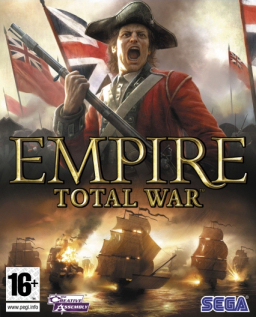
Empire: Total War Review


"'The death of one man is a tragedy, the death of a million is a statistic' - Joesph Stalin, 2012"

        A quote that is constantly attributed to Joesph Stalin but I'm pretty sure he never said that. I don't think he even knew English all that well. I'd imagine that whatever he said was in Russian, and maybe the translation is so loose there's a connotation we're not getting. I'm sure he did say it in 2012, tho, and that's the important thing. I'm pretty sure he'd get a kick out of Empire: Total War too, because it's pretty fun for the most part, and he can have all sorts of fun out of crushing Georgia.

      But I'm not Stalin so I have to use this game for slight different purpose. I've always considered strategy, and specifically historical-strategy games to be in a unique position in terms of presenting an experience to the player as a learning and relational tool. Empire, as the name suggests, is about an empires at war; a hi-fi look at 1700 Europe (as well as the Near East, North Africa, India, and early Americas) with the ability to command your empire as seen fit. The relational tool comes with the construction and domestic issues of your nation, do you allow for revolution, maximizing happiness but possibly destroying your wonderful cabinet, or do you retain your monarchy, destroying the lower class but retaining world class military genius? Do you create hundreds of schools, furthering enlightenment thinking and improving market efficiency, at the risk of ensuring that previously mentioned reform, or do you keep an "underdeveloped" (in a traditional Western sense) mass that are brilliantly tactile farmers and iron workers. It's in these decisions that Empire becomes more than just a waste of time but a functional tool for understanding the struggle of power?

     However, it's hard to determine if it's a good one. The biggest hurdle, obviously, is the lack of supposed empathy. It's nearly impossible to feel for the unhappy masses in the game, because there's an obstacle that comes in designing a method of "feeling" for a person that has no effect on the way the game is played, and all "care" for them comes from outside of the player's function as a "player of the game". Perhaps, however, this is the idea. The death of a million is a statistic. You don't feel anything for the 11 million Hindustan residents, because they are faceless numbers. You make them happy, and you get a good number. You make them sad, you get a bad number, which could eventually lead to revolt. When it comes down to it, everything is subject to selfishness, because the games explicit desire is to take over X many regions and keep them held. All else done is a backhanded way to appease just enough to make profit. This is a slight problem with the design, because you're never encouraged to LEAD, only CONQUER. Everything is pushed forward in the game, with the only time for introspection coming in the period after conquering, while you conquer your next area, when you need to keep your new region just happy enough to not revolt.

     Regrettably, I have to cast that off as just a function of strategic, rather than the relational tool I suggest, but whatever, if you want to do that play Tropico, this is WAR man not just any war: TOTAL WAR. I played Spartan: Total Warrior before I played any Total War game, and if you know me I liked that game quite a bit. There was a heavy clash to every battle that escalated from the singular soldier to a battlefield of able-bodied men, all doing their damnedest to kill their enemy before their enemy can do the same. Perhaps what was most intriguing about it, was that that was true for every soldier in the game. From ally fodder to the strongest enemies, they worked with a motive that seemed wholly independent of a game program. If there was anything I was wanting from Total War, it was to see the kinetic impact of a battle and be able to get the same sense of urgency the warriors should.

   It succeeds, to an extent. When you launch a cannon shot into a castle wall, the enemy scatters around a bit to protect themselves from the onslaught. When you surprise a group of musketeers with cavalry that came from out of their sight, there's a scramble from them to keep position. When you clash head on some weak infantry with elephant mounted generals, watching the bodies fly gives you the same meditative moment of shock and awe that you can see from the battlefield. There are moments of tedium or frustration, but for what it is, the automated combat works wonders, and really provides great satisfaction for a crafty tactician.

     Basically, what I'm saying is that Empire: Total War is pretty cool. It would be much cooler if it was all online, with players as monarchs, cabinet members, generals, agents, and representatives of the peasants. Every action in the flowing market of the game has a recognizable affect on your populous, and you can feel some slight empathy for all under your wing (not perfect, Day Z still doesn't have a good community for example). When battles take place, you have the general talk about deployment, with every soldier given his own battalion he's responsible for. The general gets a top down view along with his view of his singular player (Wii U fo sho), and every player is given their view, a diagram of where they are in the general's plans, and a Mount and Blade style command of his troop (hot keys for simple maneuvers). Then, every individual players alongside and outside of their own troops with gameplay similar to Spartan: Total Warrior. And it'd be the best game ever.

But for now, Empire is pretty cool.

4/6

Wednesday, June 20, 2012

(Less Than) Formal Review: Lollipop Chainsaw


"If Suda 51 made music, he'd create the most engrossing masterpiece ever, and then throw in a tacky 5 minute guitar solo"


(note: I have not finished Lollipop Chainsaw, so this is subject to change... perhaps)
        Killer7 is an incredible game. Flower, Sun, Rain is a wonderful narrative surrounded by a narratively consistent, if a bit agitating, puzzle gameplay. No More Heroes is a poignant meta-narrative (even if it's sort of a big "fuck you"), with a fun, simple combat system. Lollipop Chainsaw is a boring, immature horror-comedy on a tired premise and a tongue-through-cheek treatment of female personas.

      It's really a far extreme from Suda 51 games: games where the story, visual, and sound design are ABOVE top notch. Games that are so well presented and so substantial that it hurts. The problem with those games, however, is that the gameplay was either sterile, or just underdeveloped. It's not always a chore, Killer7 has enough feedback and weight to get yourself into the on rails adventure/shooting of the experience, and No More Heroes really was just downright fluid. On Suda's other hand, we get Lollipop Chainsaw, a game with TOO much style, and a game that actually seems to focus on gameplay, first and foremost.

     People have denounced Lollipop Chainsaw's combat, claiming that it doesn't flow until you have combos (just a note: when you get combos, the actual connections between the combos don't change. Saying it doesn't flow until you get combos is like saying it a game would flow well if every movement you made led to a cinematic presentation of that move, but i digress), or saying that it's just mindless and slow. Maybe this is just a problem with lower difficulties (you can't just button smash on hard, for sure), maybe this is just how some reviewers felt right to play the game, I'm not sure, but it's not an experience I share.

    The combat system is very simple, pretty much standard for action games, a button for weak attacks, button for strong attacks, button for "different attack" (in this, it's a low attack, meant to remove legs, a good strategy in this game), and one button is evade. The attacks are suitably satisfying, before you have combos, you have weak attacks, quick to start, quick to end, and you can immediately exit the combo into a strong attack or an evade (usually the better choice), you have strong attacks that are slow and usually dismember, etc. The evade is really the main mode of attack however, and it is where the most fluidity comes from. Evasions, unlike something like God of War, aren't just evasive, and early on they are more of a mode to chain your attacks. Lollipop Chainsaw has a surprising awareness of space, when it comes to combat. You have many enemies, with varying ranges of attacks, some can attack well, some just take a while to kill, some need to be killed as first priority, and the entire way you engage battles has to be focused on getting positioning. Using evasion to dropkick enemies away, or just getting the enemies you want ahead of you is really more important than actually attacking them. If you evade, get three hits, evade, etc, you have a relatively successful method for the majority of enemies. It makes the game very fast and flashy, jumping and leaping around like a... cheerleader, and homing in on enemies, knocking them silly and finishing. It's engaging, and it really suits the actual character of Juliet.

   Time to leave the combat be, however, as that's not what most people focus on. It's really not even what people care about, I mean, THIS IS SUDA XD. Suda does manage to show an incredible competence and confidence in everything else, this however... I'm just not sure about. The style is there, the punk aesthetic, the decent music (this soundtrack is sorely lacking Masafumi Takada, however), and just the general approach of the game is nice, aside from all of Suda's games, this really feels like it is a game resisting mainstream appeal, until we get to the seedy underbelly where I just can't help but be disappointed: the schlock humor.

    It's not really shock humor, it's just sort of the same cheeky teen perversion comedy we've heard from not only Suda, but half the comedic video games in existence, but even if this was in Suda's other games (it was), this is just where it goes to far. In other times, it had it's place, it made sense in No More Heroes series, here, it's just forced. The writing is actually nice and charming when it needs to be: Juliet really works as what everyone recalls as the popular high school hotteen, Nick is a great foil, similarly absentminded, but cautious of Juliet and their relationship of sorts, the rest of Juliet's family is actually were the best humor comes from, very nice stuff, but much of the game seems focused on the perversion of Juliet and well everything else in the game being an overt sex-symbol. Bosses talk about "Jizzing", journal-type entries on all the special zombies remark something about sexual perversions or other teen humor (retardation, potty jokes, etc.), there are always casual remarks about this sort of thing throughout the entire game. To be honest, I just want Suda to go all out and make a pinku-game, some sort of sexploitation under the veneer of a genuine narrative. Make a Jodorowsky-influenced game. Stop showing regard for tacky censorship and perversion if you're going to have that edge. It's a game that stops just short of the line in some parts, to conform, and crosses it at others, to "prove" that they don't care about conforming. Punk must just be on life support.

Yes, 4/5. As disappointed as I am when I frame it as a Suda game, it is really a joy to play. There are moments of tedium and aggravation, but I can really say I liked playing this.

Tuesday, May 15, 2012

Formal Review: The Elder Scrolls V: Skyrim


"Probably a commentary on the mid-life crisis"

I went to a graduation ceremony this past week, most of you probably have been to one, and I'm sure most have had the same experience with a commencement speaker. After a long monologue of their college career and some stories of their life, they reach the part that's "for the students", giving some words of wisdom and and "cheerio" off the the soon-to-be graduates. Of the graduation ceremonies I've been to (three thusfar), they all have at least one point in common: "Approach each day as a new adventure".

The next day I woke up with a hangover, an hour and a half long drive ahead of me, and a general distaste for everything in the world. With a recollection of the speaker's words reverberating around my head, I only now really thought about how little he really cared what he meant. He was a former NFL starter, a CIA protection agent, and an entrepreneur. I could only imagine as he said those words to us it sunk into his head that the majority will spend their days working dead-end 9-5 jobs that they really don't enjoy doing, and will likely go through the much talked about "mid-life crisis" that occurs from the monotony of those jobs. With
my hangover and grumpiness I was already going through one. I wasn't looking at the day with bright eyes and an optimistic glare; I was looking at it as another boring day I spend doing roughly the same tasks I did the day before, and the day before, and so on.

Naturally my mind slipped to Skyrim...

I remember creating my character in Skyrim. It was a couple days after going through a couple of Arrested Development episodes, so I decided to make Carl Weathers, a strong, predator-hunting Redguard with a love of stews. I follow some rebels to get my head lobbed off when this dragon comes and wrecks all those glorious plans of removal. I follow some dude (I didn't really care who it was, as little in that scenario would) around for a bit, following his words and on-screen prompts, and came to a choice to follow guy A or guy B. At this point, I still didn't care who I was following... I choose Guy B because he was closer. So, so on and so forth, I go through the tutorial dungeon and make it to the the world.

Ah yes freedom. More than just the idea that I had a free world now, the game has (literally) taken off my shackles and given me all these options to explore, so naturally I continued to follow this guy to the near town and main quest mission. I meet these people and they tell me the main struggle of this world, I'm to help  this rebellion or crush it, whatever I want.

So let's pause there. It's obvious at this point that what I choose is going to be the "winning" side, and I'm going to be the main catalyst for it. But it's not just because "that's the way a game is", but there's a narrative reason for it (seemingly): I am the DOVAHKIN (sp? idc) of lore; a mythical man and dragon tamer/translator. I've been given the role of the chosen one, destined to make some sort of change and whatever. Why is it that a game that so admires freedom puts a "destiny on you"?. Well that's pretty pointless anyway, the "destiny" is supposedly up for you to decide. What's more important, is why does every game have to make sure the player is special? Why do I have to be a destined warrior? Why am I the one all these duties fall upon? Is it just so I won't be bored?

The game makes you the NFL starter CIA agent badass that gives the commencement speech. You're allowed to look every day with a bright new glare because you're given the world and everything you can imagine to do with it... until you realize that it's as dead and decrepit as a 9-5 desk job.

In that first town I was at, I decided to walk around, pick some flowers loot some barrels... if I was going to have stew I'd have to get some ingredients... and I found a cooking pot. "GREAT" I thought to myself, "now I have the tool I need to make this stew". Well, I would if i didn't know from the start that it had no actual use, and was just given to make the world more "lively" and give it that "lived in feeling" (why is someone putting cooking pots out no where near their house?). So I sold it for some chump change and went on my way.

But let's talk about the economy of Skyrim... there is none. Each town needs approximately one store: "Things the main character needs". You get coins and you sell them to a shop, then you get potions and weapons and other assorted goods. That is, until you're midway through the game, have looted the much better special items from dungeons and have no need for the iron helmet the store is offering. The "liveliness" of the towns and stores diminishes once you realize you are the only one using it, and the items you aren't buying are just props trying to trick you into thinking the quest givers of the town have a personality.

They don't, btw. The quests are largely bland, and the dialog is certainly not top quality, but this is actually not a bad part of the game. Aside from the seemingly pointless "go kill these things" or "collect these things", they aren't terrible, and even the pointless ones have the point of making you explore.

Wait, no that is a problem. There is no reason to explore the world, for every type of player. There are some people out there that may just get satisfaction going out and looking at the different dead areas of trees and mountains. Maybe you'll come upon a cave with some bandits and a good sword.. maybe you'll get a quest. The problem is that those aren't the highlights, the highlights are finding small houses in the middle of nowhere with no one living.

Jason Rohrer once thought of a meta-game to use in minecraft. He started it by creating a file on a usb drive, and making a simple set of rules"
1.No writing boards
2.Once you die, you give the USB drive to someone else
The idea of this game is that you'd see the creations of previous players, and you'd create stories around it. You'd imagine them mining and you'd see the destruction from the different enemies of the game and this and that, and you'd think of the times they had in the world. The liveliest Skyrim ever felt to me, is when I found an Alchemist's Shack out in the middle of nowhere. Among the flowers and ingredients and stuff, there was nothing more than a note. I forget what it said, don't really care, but it left no conclusion to the story, no quest, and nothing to attack that shack to anything else in the world. I let it be after that. I thought of the idea of this alchemist, what could have happened, and where he could have gone. That was the only time I ever felt the wonderment of discovery in Skyrim. The only time I felt I was playing in a world that was lived in.

It wasn't soon after that that I approached a big spider creature I needed to get out of my way to go to the next portion of the main quest. I tapped the button to slash my sword, step backed and used some spell to attack, drank a potion as I was losing a bit of health, and carried on after looting some venom from the corpse. Every battles is basically like this. No enemies really react at all, and there's no crunch or friction in the combat. Sometimes you're not even really sure if you hit the enemy, the only clue is the little health bar moving down a bit. Well, as you go along your power attacks will occasionally cause different effects, but there's still nothing that really promotes interplay throughout the characters. I'm not asking for GOD HAND, but give me some sort of game within the combat. I don't enjoy fighting these creatures, to me they are just distractions for the walking and completing quests.

And this is where my real problem with the game lies. I don't feel compelled to explore the lifeless world, I don't feel compelled to go out fighting, and all I really feel compelled to do is just complete. This is my mid-life crisis. I don't enjoy what I'm doing, but I continue doing it on the premise that I'm getting better, and I'm getting closer to the end. I want to go get this sword, because it's going to make me stronger (even tho by getting it I'll unlock stronger enemies... thnx for that levelling system bethesda), I want to finish this quest because it will advance the storyline, etc. But as I am now, after taking a step back and looking what I was doing, I have to wonder "why?". If this is a game about discovery, the only one I've made is that I am easily distracted. That I can easily be asked to do something I don't like just to make myself fit in to a system. Skyrim is my dead end job and this endless struggle for power that comes with it is my lack of vertical, economic mobility. I've had my mid-life crisis and it's resulted in me shutting off my game.

SCORE: 2/5